 Juniper County Fire Rescue
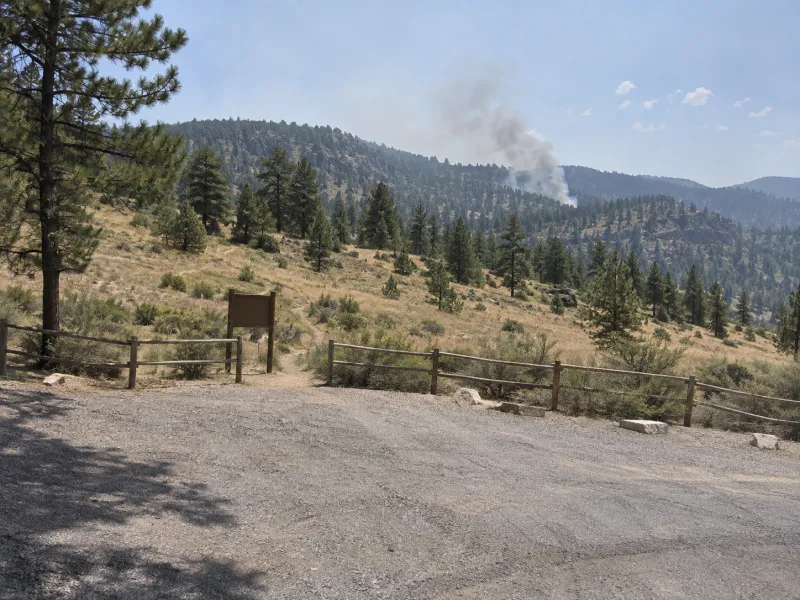 Alarm clip, Camera 214:41
Broadcast Channels
The county publishes warnings, orders and updates in a channel; subscribers read the full history and the apps notify them. Comments are optional and set by the channel owner.


Incident groups for fire, EMS and emergency management, mutual aid with neighboring agencies, camera alarms from IREX and alert channels for residents, on servers your agency controls.
Overview
When smoke shows on a hillside, the incident commander, the engine crew, the ambulance, the hospital, the county’s emergency managers and a neighboring district all need the same picture at once. Too often it travels through personal phones, scattered group chats and calls that leave no shared record.
Sover gives a fire or emergency-management agency its own communications platform: incident groups for crews and liaisons, bots that bring system events into the chat, IREX alarm notifications where IREX runs, federation with partner agencies and broadcast channels for residents, all on servers your agency or your government controls.
Why Sover
Responders often coordinate in public messenger groups or on managed enterprise platforms. Both are services a provider hosts and runs. Sover is software your agency or your government runs.
| Public Messenger Groups | Managed Enterprise Platforms | Sover | |
|---|---|---|---|
| Incident Records Stay Local | Stored on the provider’s servers, in the locations the provider chooses. | Stored in the provider’s cloud, in the regions the provider offers. | Stored and processed on servers you choose: your data center, or a trusted provider you select. |
| Accounts the Agency Controls | Personal accounts that each member registers and keeps. | Accounts in the provider’s directory, under the provider’s options. | Your administrators manage users, roles, devices and sessions, with mandatory two-factor authentication, audit logging and one-way sync from Microsoft Active Directory. |
| Alarms and System Events in the Chat | Bots and integrations on the provider’s terms. | Integrations through the provider’s marketplace and APIs. | Your own bots through the Bot API with 50+ REST methods, and IREX alarm notifications in dedicated security spaces where you run the IREX platform. Integrations & APIs |
| Mutual Aid with Partner Agencies | Everyone joins the provider’s one network. | External access configured within the provider’s service. | Closed federation between instances each agency hosts, with an approved-partner list and per-user and per-group policies. Federated Network |
| Alerts to Residents under Your Name | Channels inside the provider’s app and brand. | Designed for an organization’s own staff. | Broadcast channels in apps that can be rebranded under your government’s name, on an instance it runs for residents. |
Compared by category of service; individual services, plans and settings differ, so evaluate each against your requirements.
Use Cases
One group per incident for command staff, crews, EMS and liaisons, with voice messages, photos, video and files from the field.
With the IREX Ethical AI Platform, IREX alarm notifications arrive in real time in dedicated security spaces, where the team on duty reviews them.
Ask IREX, shipping in beta on selected instances, searches the IREX archive from a Sover chat. Crews forward stills, clips and files to the incident group.
A neighboring district on its own instance joins a shared group through closed federation, and each agency keeps its own policy.
Broadcast channels carry warnings, orders and the all clear to residents who follow them, in the app your government runs.
Video meetings for shift briefings and reviews, with call transcription and summaries from the AI assistant for people to check.
Illustrative chats from a fictional county fire department. Bots, channels and federation are what an agency builds on Sover; IREX features require the IREX platform.
Juniper County Fire Rescue, Cedar Basin Fire District, their people, places and events are fictional and illustrative. Not a customer reference. Ask IREX is shipping in beta on selected instances.
Mass Notification & Alerts
Sover carries alerts inside its apps, to the people who need them, in the channels and chats where they can act.
The county publishes warnings, orders and updates in a channel; subscribers read the full history and the apps notify them. Comments are optional and set by the channel owner.
A bot built on the Bot API posts an event from your systems into an authorized chat, can mention the person who should act, and replies stay attached to it.
Where the IREX platform runs, its alarms arrive in real time in dedicated security spaces in Sover.
Sover does not send SMS, cell broadcast or siren alerts. Keep those systems for warnings that must reach everyone, and use Sover channels for the people who follow your agency in the app.
Sover with IREX
Sover connects to the IREX Ethical AI Platform. IREX analyzes the video, for example with its fire and smoke or crowd density detection, and its alarm notifications arrive in real time in dedicated security spaces in Sover, where the team on duty sees the event and discusses it in context.
Ask IREX, shipping in beta on selected instances, lets users search the IREX archive for people, vehicles and events in natural language from a Sover chat. IREX agentic AI runs each request under the IREX platform’s Case ID and audit-logging controls.
Both require the IREX platform; neither is standalone video analytics in Sover.
Deployment
A county fire department or emergency-management office can run its own dedicated Sover instance, in its data center or with a trusted provider it selects. A neighboring district runs its own, and the two open only the exchanges they approve for mutual aid.
Residents are reached on the instance your government or a national operator runs for the public, for example as a multi-tenant instance in a national federation, where your agency publishes its alert channel.
Bare metal in your data center, with the Sover Private Cloud included: provisioning, storage, data services, observability, security and a management console in one product.
Deployment OptionsSover on a Kubernetes cluster your team already operates. The Sover Private Cloud stays included; this setup takes a custom SLA.
Sover on the virtual machines you already run, including legacy hypervisors such as VMware ESXi.
Included
Groups and channels. Direct messages, incident groups and broadcast channels with voice and video messages, photos, files and polls.
Bots and agents. The Bot API with 50+ REST methods and a Python client library, and MCP for AI agents under your policy.
Federation. Open or closed federation with the agencies you approve, under per-user and per-group policies.
Meetings. Voice and video calls, with call transcription and summaries from the AI assistant.
Your controls. Mandatory two-factor authentication, role-based access, device and session management, and administrative audit logging.
Your hosting and support. Three deployment options in one model, with the Sover Private Cloud included and Standard Support under the Sover SLA.
Not a public warning system. Sover does not send SMS, cell broadcast or siren alerts. A channel reaches the people who follow it in the app.
Not a dispatch system. A notification in a chat does not by itself create an incident-management or dispatch workflow; scope the source system, destination and response.
Residents need an account. Residents follow a channel with an account on the instance, under the registration policy its operator sets.
IREX features need IREX. Alarm notifications and Ask IREX require the IREX platform, and Ask IREX is shipping in beta on selected instances.
Mobile push uses platform services. Push notifications to phones are delivered through the Apple, Google or Huawei notification services.
No uptime figure. Sover is hosted by you, so the SLA sets support response times, not availability; design high availability into the deployment.
More Industries
The deployment that serves your responders can extend, on the same platform or through federated instances, to the applications below.
Ministries, agencies and city governments on their own instances, working together through federation.
Learn MoreOfficial channels and service bots a national operator builds on the Bot API, which citizens reach in the messenger they already use.
Learn MoreShared instances a national operator runs on its own infrastructure for citizens and small businesses.
Learn MoreA police force can run a high-security instance of its own and open only the exchanges it approves.
Learn MoreRegulated institutions keep communications on infrastructure they operate, with role-based access and audit logging.
Learn MoreMessaging and video meetings for clinical and administrative teams, hosted where the organization decides.
Learn MoreSeparately hosted operators keep their own instances and connect them where they need controlled communication.
Learn MoreTell us about your department or agency and we will arrange a briefing for your team.
Through broadcast channels. Where residents use a messenger that your government or a national operator runs on Sover, your agency can publish warnings and updates in a channel they follow, and the apps notify them. Sover does not send SMS, cell broadcast or siren alerts, so keep those systems for warnings that must reach everyone.
Yes. A bot integration can bring a system event into an authorized conversation where staff can review and discuss it. Scope the source system, destination, permissions, and expected response; the message does not by itself create an incident-management system.
Sover can receive IREX alarm notifications and provide a chat interface for Ask IREX, the beta capability for natural-language queries of the IREX archive. These workflows require the IREX platform; they are not standalone Sover video analytics.
Sover supports open and closed federation, including approved-partner policies. Define the intended partners and permitted communication when designing the deployment, then validate the required restrictions on the selected release.
Yes. Each organization controls its instance and can set policies for cross-instance communication. Requirements such as restrictions on forwarding or contact sharing should be scoped and tested for the participants and clients involved.
A group supports conversation among its participants. A broadcast channel is suited to announcements, with optional comments controlled by the channel owner.
High availability is a deployment-design requirement covering application services, databases, storage, media, and dependencies. The architecture and acceptance tests must establish the workload sustained during failures rather than relying on a universal replica count.
Not automatically. Push services, identity providers, calendar systems, AI services, and other integrations can introduce external dependencies. Review the actual data flows and enabled services when designing a restricted-network deployment.
Call transcription and conversation summaries can help participants review a discussion. Check the assistant configuration and output available in the deployment, and have people review the result before using it as an agreed decision record.